Article
Data Clean Rooms and Adobe: How to Collaborate with Data Without Compromising Privacy

For years, the growth of digital marketing rested on a simple premise: more data meant better decisions. Sharing information between brands, agencies, platforms, and publishers seemed like the natural path to better understanding customers and optimizing campaigns. Today, that logic no longer holds.
Increasingly strict privacy regulations, consumers who are more aware of how their information is used, and the disappearance of traditional identifiers have put brands in front of a complex dilemma:
How can you collaborate with other players in the ecosystem without exposing sensitive data or risking customer trust?
This is where Data Clean Rooms come in — and Adobe Real-Time CDP Collaboration in particular — as a strategic response to one of today's biggest marketing challenges: collaborating without sharing raw data.
What Is a Data Clean Room and Why Has It Become Indispensable?
A Data Clean Room is a secure environment that allows two or more organizations to collaborate on data without any of them revealing their confidential information.
Instead of exchanging databases, the parties:
- Run joint analyses
- Identify shared audiences
- Measure campaign results
All of this happens under strict privacy, anonymization, and governance controls. A simple way to understand it is through this analogy: A Data Clean Room is like working together in a room with glass walls — everyone sees the result, but nobody touches the other party's data. In a context where trust has become currency, this model is no longer optional — it has become critical infrastructure.


The Real Problem: Collaborating Without Control Is No Longer Viable
Many brands still operate with legacy data collaboration models:
- Manual file transfers
- Unclear integrations
- Processes that are difficult to audit
- Legal and operational risks
The result is a fragile ecosystem:
- Siloed data
- Less relevant campaigns
- Limited measurement of real impact
- Internal and external distrust
On top of this, there is additional pressure: customers expect personalization, but they also demand transparency and respect for their information.
The challenge is no small one: personalize without intruding.
Adobe Real-Time CDP Collaboration: Privacy-Safe Collaboration by Design
Adobe Real-Time CDP Collaboration was built precisely to resolve this tension between personalization and privacy. It is not just a traditional Data Clean Room — it is a natural extension of Adobe Experience Platform, designed to enable secure, scalable, and actionable collaboration.
How does it work in practice?
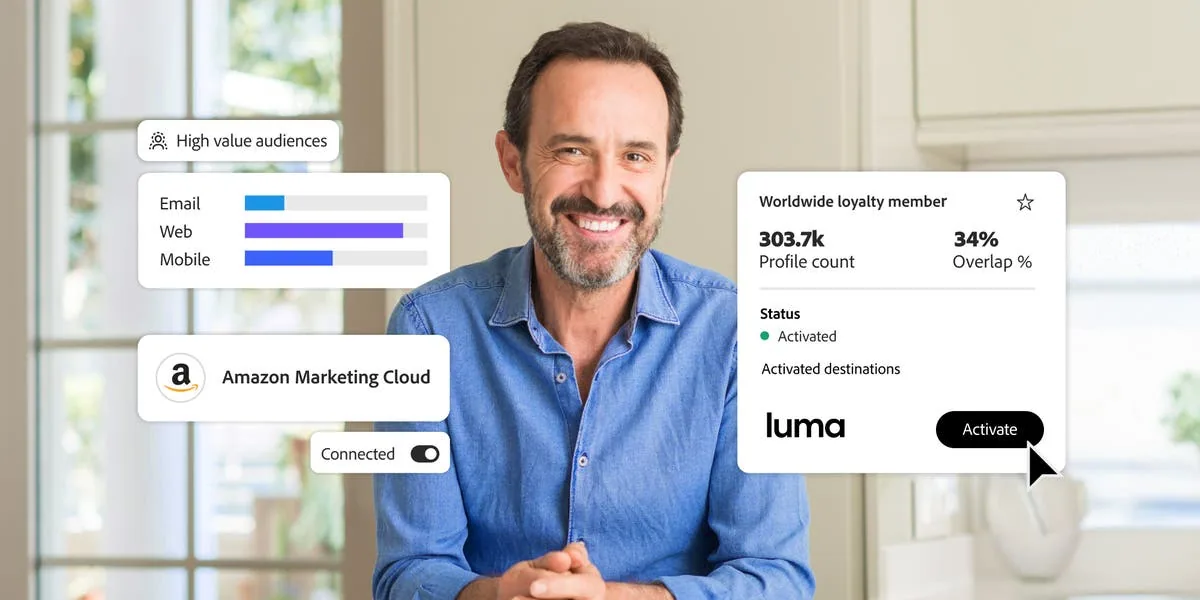
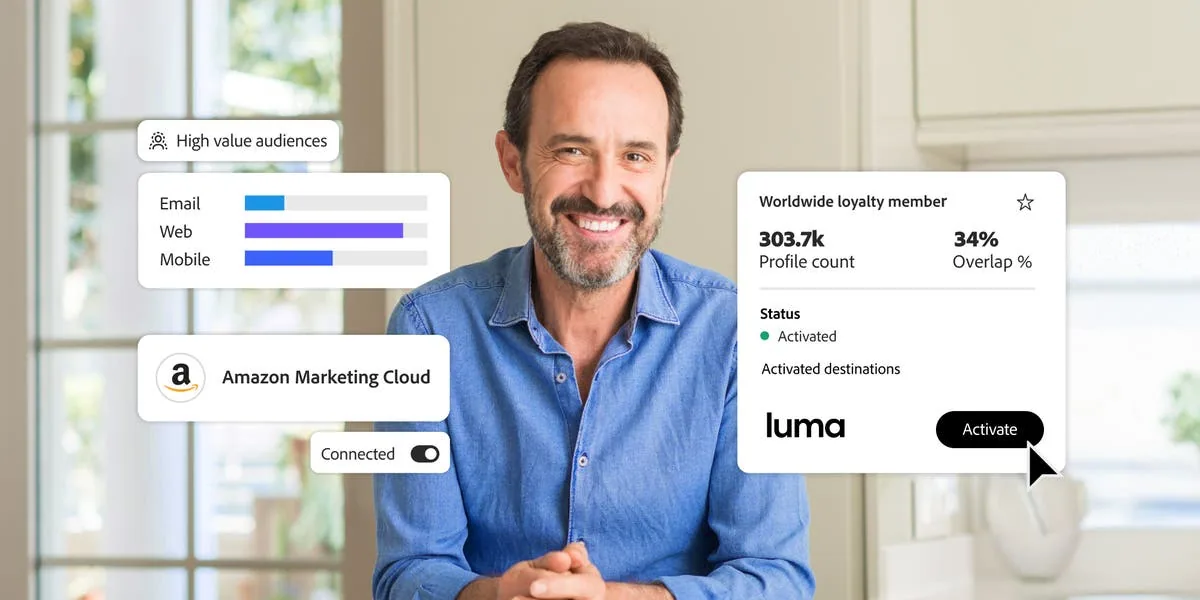
Adobe enables brands, agencies, and publishers to:
- Connect their first-party data securely
- Define clear usage and governance rules
- Run joint analyses without exposing PII
- Activate insights directly in campaigns
Data is never copied or exchanged directly. What is shared are anonymized, authorized results — always under the control of the data owner.
Privacy, Anonymization, and Advanced Governance
One of the biggest differentiators of Adobe Real-Time CDP Collaboration is its comprehensive approach to responsible AI and privacy by design.
Its key capabilities include:
- Advanced anonymization and hashing techniques
- Granular access controls
- Configurable governance policies
- Compliance with global privacy regulations
This allows brands to collaborate with confidence, knowing that:
- Their data will not be misused
- Every use is tracked and audited
- Consumer privacy remains intact
In this model, privacy stops being a barrier and becomes an enabler of growth.
Real Use Cases: Where Collaboration Becomes Value
Data Clean Rooms truly come into their own when they translate into concrete business decisions.
Brand + Retailer
A brand can identify shared audiences with a retailer without accessing individual data. The result: more relevant campaigns, better attribution, and higher ROI.
Brand + Agency Agencies can optimize media and creative strategies based on joint insights, without receiving or exposing sensitive client data.
Brand + Publisher Publishers can demonstrate the real impact of their audiences on conversions, strengthening commercial relationships based on results rather than assumptions.
In every case, collaboration happens without sacrificing control or trust.
Data Clean Rooms Within a Connected Ecosystem
The true power of Adobe Real-Time CDP Collaboration is unlocked when it integrates with the rest of the Adobe ecosystem:
- Adobe Experience Platform as the unified data foundation
- Real-time omnichannel activation
- Advanced campaign impact measurement
- Continuous optimization based on reliable insights
This prevents Data Clean Rooms from becoming isolated silos and transforms them into a strategic lever within modern marketing.
From Privacy to Growth: A Shift in Mindset
For a long time, privacy was seen as a constraint.
Today, leading brands understand that:
- Respecting data builds trust
- Trust builds loyalty
- Loyalty drives sustainable growth
Data Clean Rooms not only enable regulatory compliance — they make it possible to design stronger relationships between brands, partners, and consumers.
Collaborating Better Is the New Competitive Advantage
The future of marketing does not belong to those who collect the most data, but to those who know how to collaborate better with the data they already have. Adobe Real-Time CDP Collaboration redefines the way brands work together:
- Without exposing sensitive information
- With full control and advanced governance
- With measurable, actionable results
In a world where trust is scarce, collaborating securely becomes a genuine competitive advantage.


Related services
If this topic is relevant to your business, these services from WolfSellers can help you implement it: