
Article
Strategic Integration of AEM and Adobe Commerce: The Powerful Fusion of Content and eCommerce
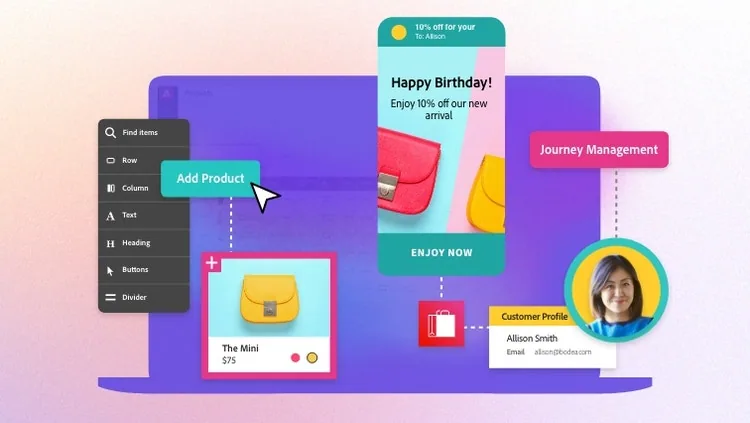
Strategic Integration of AEM and Adobe Commerce:
The Powerful Fusion of Content and eCommerce
In the dynamic world of eCommerce, the ability to attract, convert, and retain customers is crucial to the success of any online business. That's why the strategic integration of Adobe Experience Manager (AEM) and Adobe Commerce emerges as a powerful and transformative solution. This fusion doesn't just connect content with purchase opportunities — it creates an immersive experience that sets brands apart in today's digital marketplace.
The Power of Connection
The integration of AEM and Adobe Commerce establishes a strong link between content and purchase opportunities, resulting in a seamless customer journey. This connection allows consumers to immerse themselves in an enriching online experience, where every interaction with the brand becomes an opportunity to build strong, lasting relationships.
What is AEM?
Adobe Experience Manager (AEM) is Adobe's leading enterprise content management system. It offers a robust platform that enables businesses to create, manage, and publish content efficiently across multiple channels and devices. From personalization to content optimization, AEM provides powerful tools to enhance the user experience and increase the effectiveness of digital marketing strategies.
Advantages of AEM
The advantages of using AEM are diverse and significant. They include integrated digital asset management, real-time collaboration across teams, and the ability to scale and adapt to changing business needs. In addition, AEM offers seamless integration with Adobe Commerce, enabling a consistent and personalized shopping experience for customers.
Beyond driving business growth, this integration unlocks a world of unlimited possibilities. From personalization at scale to performance optimization, this transformative partnership empowers businesses to deliver exceptional shopping experiences that generate customer loyalty and advocacy.
The integration of AEM and Adobe Commerce offers several key benefits:
- Increased speed to scale. - Seamless omnichannel publishing. - Personalization and differentiation at scale. - Extended eCommerce analytics. - Unified brand presence.
Here's how brands specifically benefit from integrating AEM and Adobe Commerce:
Increased speed to scale: Strengthening a smoother relationship between your eCommerce system and your content helps streamline the customer journey and improve conversion rates, enabling you to scale faster.
Seamless omnichannel publishing: Having your product catalogs and all your digital experiences operating in sync ensures that when something changes on the eCommerce front, your content won't fall behind.
Personalization and differentiation at scale: Bringing your eCommerce system into your content personalization strategy significantly improves the speed at which your customers find — or reconnect with — what they were looking for, moving them to checkout faster.
Extended eCommerce analytics: AEM's built-in integrations with powerful analytics tools (Adobe Analytics, Adobe Target, Customer Journey Analytics, etc.) help you get more out of your eCommerce data, building a deeper understanding of your customers.
Unified brand presence: The integration allows both your content system and your eCommerce system to pull assets from a central DAM within AEM, ensuring your brand remains consistent across all experiences.
Here's a look at how developers benefit from the AEM and Adobe Commerce integration:
Nothing gets lost in translation: Both AEM and Adobe Commerce feature core components and architectures that operate similarly in design and best practices, making it easier for developers to apply their knowledge of each platform within an integrated environment.
Unified platform: Having your content management and eCommerce processes in one place reduces the opportunity for misalignment between the two systems.
Easy access to shared content: Developers no longer need to switch between asset repositories searching for what they need. With Adobe Commerce and AEM integrated, both systems can pull assets from AEM's DAM.
Easier maintenance: The integration significantly reduces the time spent navigating and managing the two platforms individually. Instead, both the eCommerce and content systems can be managed in a single place.
How to Integrate AEM and Adobe Commerce
Integrating AEM and Adobe Commerce involves several steps:
- Install and configure Adobe Commerce independently. - Configure the CIF extension and core components within AEM. - Set up the commerce integration framework. - Configure data synchronization. - Map Adobe Commerce data in AEM. - Test and fine-tune.
AEM is ideal for enterprise groups or companies with the necessary resources in terms of staff and budget. However, this powerful tool — with its fantastic capabilities — also quickly presents businesses with unexpected challenges. Correctly setting up an AEM project is quite demanding from both a technical and structural standpoint. As a result, the ideal AEM solution typically requires subject matter experts. As an Adobe Gold Partner, we offer experienced services backed by deep expertise across all departments involved in the project. We provide support, configuration, and consulting — guaranteeing a fast response in the event of sudden issues and delivering ongoing optimization work. This is the smart way to use AEM over the long term and profitably. When used correctly, Adobe Experience Manager can achieve your digital transformation goals.
For eCommerce brands currently using AEM — and those seriously considering migrating to AEM — integrating your content side with Adobe Commerce comes with a long list of long-term benefits. Not only do you gain the advantage of brand unity across both platforms, but you also greatly enhance your ability to personalize and differentiate experiences for your users, both of which accelerate your ability to scale. And while the process of integrating the two platforms requires specialized technical expertise from development teams, it is far simpler than it might otherwise be, thanks to Adobe's CIF and the similar core component structure shared by AEM and Adobe Commerce. We can guide you through every step of your digital transformation.
A Future of Possibilities
The integration of AEM and Adobe Commerce represents more than a simple technological evolution — it's a revolution in the way businesses do business online. It's a call to action for companies that want to lead the way toward a brighter and more promising digital future. In a competitive environment where customer experience is paramount, the integration of AEM and Adobe Commerce becomes a fundamental differentiator that drives long-term success.
Are you ready to explore new territory full of opportunities and unlimited potential? We're here to help you at every step of the journey toward digital success! With our team of digital transformation experts, you can rest assured that your commerce operation will be prepared to meet the challenges of the digital marketplace and make the most of emerging opportunities.
The future is waiting — let's conquer it together! Contact us and join the Digital Revolution today!
Related services
If this topic is relevant to your business, these services from WolfSellers can help you implement it: